Welcome to the official website of Xi'an Yuli Electronic Technology Co., Ltd.


Understanding High Power Relays: Essential Insights for Professionals
2025-05-02
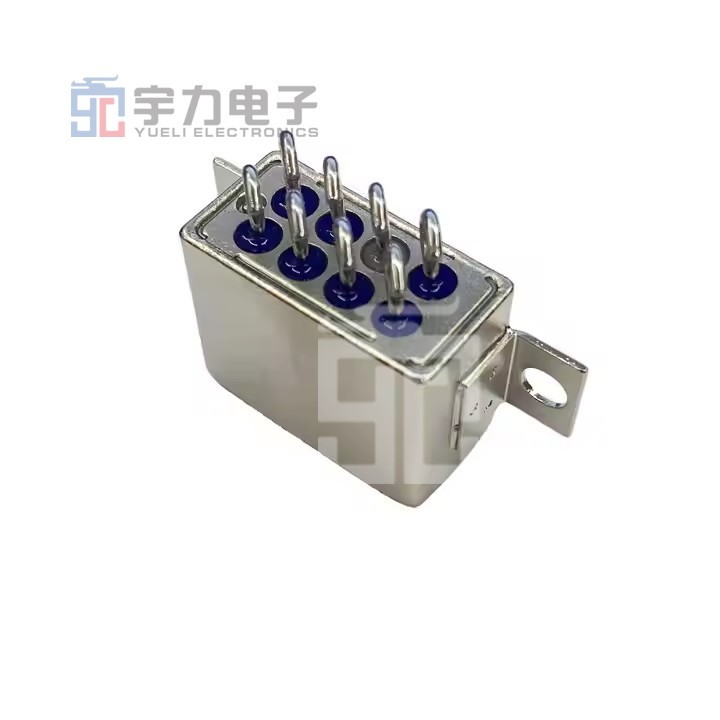
High power relays are specialized electromechanical devices designed to control large electrical loads with high voltage and current levels. They act as switches, allowing low power control signals to manage bigger power circuits safely and efficiently. This unique capability makes high power relays essential components in various industries, including renewable energy, industrial automation, automotive, and telecommunications.
One of the key features of high power relays is their ability to handle significant electrical loads without overheating or failing. This is accomplished through robust construction and materials designed to withstand high temperatures and electrical stresses. High power relays typically employ contacts made from alloys that offer lower resistance, thereby minimizing energy loss and ensuring reliable performance over time.
The operational principle of a high power relay is relatively straightforward. When a low-power input signal is applied to the relay's coil, it generates a magnetic field that pulls a movable contact toward a fixed contact, completing the circuit. Conversely, when the input signal is removed, a spring mechanism returns the movable contact to its original position, breaking the circuit. This quick switching action is crucial for applications that require rapid response times, such as motor control and load switching.
High power relays come in various configurations, including single-pole, double-pole, and multi-pole designs, enabling them to control multiple circuits simultaneously. They can also be designed as normally open (NO) or normally closed (NC) contacts, offering flexibility in circuit design. Additionally, high power relays can be equipped with features like built-in protection circuits, which safeguard them from voltage spikes and surges—this is especially important in applications where electrical stability is paramount.
In the context of the electronics industry, understanding the specifications and capabilities of high power relays is essential for selecting the right component for a given application. Professionals must consider factors such as load requirements, voltage ratings, switching speed, and environmental conditions (such as temperature and humidity) when making their choice.
Moreover, as technology advances, the development of solid-state relays (SSRs) has introduced an alternative to traditional high power relays. While SSRs provide faster switching speeds and longer lifespans, high power relays remain indispensable in scenarios where high current capacity and electrical isolation are critical.
In summary, high power relays are vital components that enhance the functionality and safety of electronic systems across various sectors. By grasping their operational principles and applications, professionals can make informed decisions and optimize the performance of their electronic designs. Understanding these relays not only aids in system reliability but also contributes to the overall efficiency of modern electronic applications.
One of the key features of high power relays is their ability to handle significant electrical loads without overheating or failing. This is accomplished through robust construction and materials designed to withstand high temperatures and electrical stresses. High power relays typically employ contacts made from alloys that offer lower resistance, thereby minimizing energy loss and ensuring reliable performance over time.
The operational principle of a high power relay is relatively straightforward. When a low-power input signal is applied to the relay's coil, it generates a magnetic field that pulls a movable contact toward a fixed contact, completing the circuit. Conversely, when the input signal is removed, a spring mechanism returns the movable contact to its original position, breaking the circuit. This quick switching action is crucial for applications that require rapid response times, such as motor control and load switching.
High power relays come in various configurations, including single-pole, double-pole, and multi-pole designs, enabling them to control multiple circuits simultaneously. They can also be designed as normally open (NO) or normally closed (NC) contacts, offering flexibility in circuit design. Additionally, high power relays can be equipped with features like built-in protection circuits, which safeguard them from voltage spikes and surges—this is especially important in applications where electrical stability is paramount.
In the context of the electronics industry, understanding the specifications and capabilities of high power relays is essential for selecting the right component for a given application. Professionals must consider factors such as load requirements, voltage ratings, switching speed, and environmental conditions (such as temperature and humidity) when making their choice.
Moreover, as technology advances, the development of solid-state relays (SSRs) has introduced an alternative to traditional high power relays. While SSRs provide faster switching speeds and longer lifespans, high power relays remain indispensable in scenarios where high current capacity and electrical isolation are critical.
In summary, high power relays are vital components that enhance the functionality and safety of electronic systems across various sectors. By grasping their operational principles and applications, professionals can make informed decisions and optimize the performance of their electronic designs. Understanding these relays not only aids in system reliability but also contributes to the overall efficiency of modern electronic applications.
Xi'an Yuli Electronic Technology Co., Ltd.
Whats App:+8618122061211

Message consultation
Note: Please leave your contact information and our professionals will contact you as soon as possible!