Welcome to the official website of Xi'an Yuli Electronic Technology Co., Ltd.


Understanding Radio Frequency Relays: Key Insights and Applications
2025-09-25
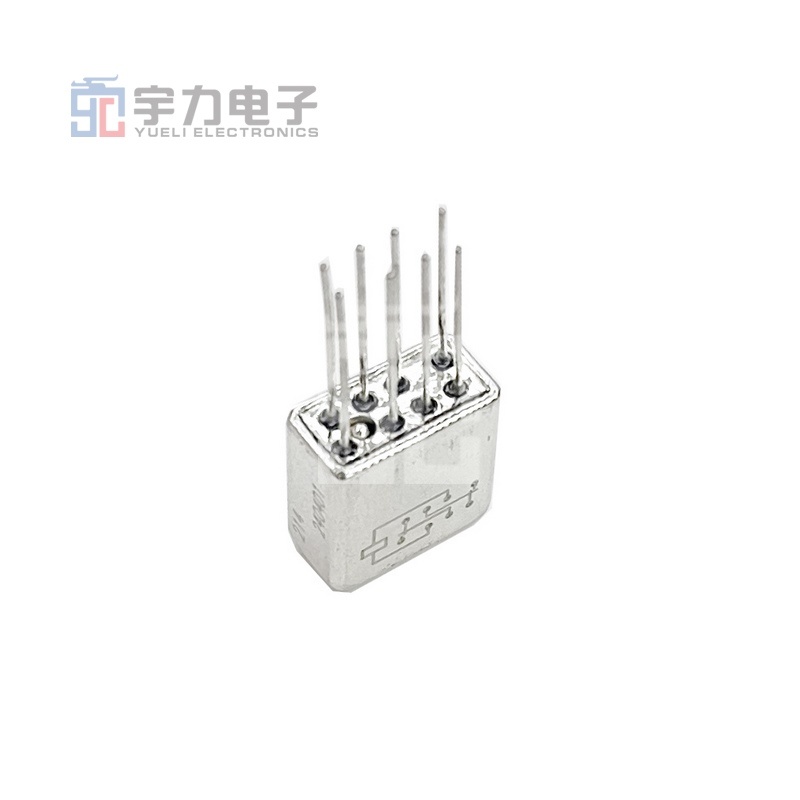
Radio frequency relays are critical components in the electronic realm, particularly within the domain of electronic components and relays. These devices are designed to control the flow of electrical signals by utilizing radio frequency energy, making them indispensable in various applications. Unlike traditional electromagnetic relays, radio frequency relays operate by responding to radio signals, allowing for remote control and communication without the need for physical connections.
One of the primary advantages of radio frequency relays is their ability to function effectively in environments where wiring is impractical or impossible. This feature is particularly beneficial in scenarios such as remote industrial operations, home automation systems, and telecommunications, where controlling devices from a distance is essential. By leveraging radio frequency technology, these relays can facilitate seamless communication between devices, enhancing automation and efficiency.
In terms of design, radio frequency relays are engineered to handle high-frequency signals, typically within the range of 3 kHz to several GHz. This wide frequency range allows them to cater to various applications, from simple signal switching to complex data transmission tasks. Additionally, the compact size and lightweight nature of these relays contribute to their versatility, enabling integration into diverse electronic systems without adding significant bulk or weight.
Another noteworthy aspect of radio frequency relays is their ability to minimize interference and enhance signal integrity. They are designed to provide reliable performance even in challenging conditions, such as high electromagnetic interference environments. This reliability is crucial in applications like aerospace, automotive, and medical devices, where consistent and accurate signal transmission can significantly impact performance and safety.
Furthermore, radio frequency relays often come equipped with features that support automation and smart technology integration. For instance, many models can be programmed or controlled wirelessly, allowing users to manage multiple devices from a single interface. This capability aligns with the growing trend of IoT (Internet of Things), where interconnected devices work together to create more efficient systems.
In conclusion, radio frequency relays serve as vital components in the electronic components industry, enabling remote control and efficient communication in various applications. Their ability to operate in high-frequency ranges, combined with their reliability and compact design, makes them essential for modern technological advancements. As industries continue to evolve towards greater automation and connectivity, the significance of radio frequency relays will undoubtedly grow, paving the way for innovative solutions in the future.
One of the primary advantages of radio frequency relays is their ability to function effectively in environments where wiring is impractical or impossible. This feature is particularly beneficial in scenarios such as remote industrial operations, home automation systems, and telecommunications, where controlling devices from a distance is essential. By leveraging radio frequency technology, these relays can facilitate seamless communication between devices, enhancing automation and efficiency.
In terms of design, radio frequency relays are engineered to handle high-frequency signals, typically within the range of 3 kHz to several GHz. This wide frequency range allows them to cater to various applications, from simple signal switching to complex data transmission tasks. Additionally, the compact size and lightweight nature of these relays contribute to their versatility, enabling integration into diverse electronic systems without adding significant bulk or weight.
Another noteworthy aspect of radio frequency relays is their ability to minimize interference and enhance signal integrity. They are designed to provide reliable performance even in challenging conditions, such as high electromagnetic interference environments. This reliability is crucial in applications like aerospace, automotive, and medical devices, where consistent and accurate signal transmission can significantly impact performance and safety.
Furthermore, radio frequency relays often come equipped with features that support automation and smart technology integration. For instance, many models can be programmed or controlled wirelessly, allowing users to manage multiple devices from a single interface. This capability aligns with the growing trend of IoT (Internet of Things), where interconnected devices work together to create more efficient systems.
In conclusion, radio frequency relays serve as vital components in the electronic components industry, enabling remote control and efficient communication in various applications. Their ability to operate in high-frequency ranges, combined with their reliability and compact design, makes them essential for modern technological advancements. As industries continue to evolve towards greater automation and connectivity, the significance of radio frequency relays will undoubtedly grow, paving the way for innovative solutions in the future.
Xi'an Yuli Electronic Technology Co., Ltd.
Whats App:+8618122061211

Message consultation
Note: Please leave your contact information and our professionals will contact you as soon as possible!