Welcome to the official website of Xi'an Yuli Electronic Technology Co., Ltd.


Understanding Radio Frequency Relays: Key Components and Applications
2025-10-09
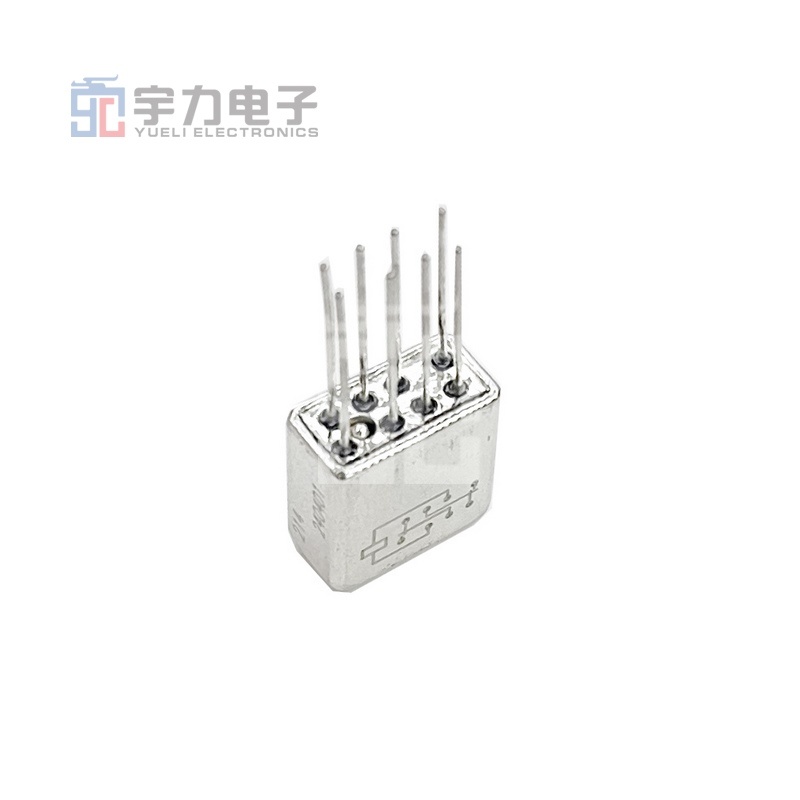
Radio frequency relays (RFRs) are critical components in various electronic systems, particularly in the telecommunications and broadcasting sectors. These relays operate by using radio frequency signals to control the switching of circuits, making them indispensable in applications requiring remote control and automation. Unlike traditional relays that rely on mechanical contacts, RFRs utilize electromagnetic fields to achieve their functionality, offering several advantages.
One of the primary features of radio frequency relays is their ability to operate at high frequencies, which allows for faster signal switching. This speed is crucial in applications such as wireless communication, where timely responses are essential for effective data transmission. Additionally, RFRs can be designed to handle multiple channels simultaneously, enhancing their versatility and efficiency in complex systems.
The construction of radio frequency relays typically involves a combination of inductive and capacitive elements, which are engineered to resonate at specific frequencies. This design not only facilitates high-frequency operation but also minimizes signal loss, ensuring that the relayed signals maintain their integrity over longer distances. Consequently, RFRs are often employed in scenarios where signal clarity is paramount, such as in radio transmitters and receivers.
In terms of applications, radio frequency relays are widely used in automated systems where remote control is necessary. For instance, in the aerospace industry, RFRs play a vital role in controlling various functions of aircraft, from communication systems to navigation equipment. Similarly, in industrial automation, these relays are utilized for wireless control of machinery, enabling greater flexibility and reducing the need for extensive wiring.
Moreover, the advent of smart technology has further propelled the use of radio frequency relays. As the Internet of Things (IoT) continues to expand, RFRs are increasingly integrated into smart devices, allowing for seamless communication between devices and enhancing overall efficiency. This integration not only simplifies the control of devices but also paves the way for innovative applications in smart homes, healthcare, and beyond.
When selecting a radio frequency relay, professionals must consider various factors such as frequency range, power handling capability, and environmental conditions. Understanding the specific requirements of your application is crucial for choosing the appropriate RFR, ensuring optimal performance and reliability.
In conclusion, radio frequency relays are pivotal in modern electronic systems, offering high-speed switching, versatility, and remote control capabilities. As technology advances, the importance of RFRs will only continue to grow, making it essential for professionals in the electronics industry to remain informed about their features and applications.
One of the primary features of radio frequency relays is their ability to operate at high frequencies, which allows for faster signal switching. This speed is crucial in applications such as wireless communication, where timely responses are essential for effective data transmission. Additionally, RFRs can be designed to handle multiple channels simultaneously, enhancing their versatility and efficiency in complex systems.
The construction of radio frequency relays typically involves a combination of inductive and capacitive elements, which are engineered to resonate at specific frequencies. This design not only facilitates high-frequency operation but also minimizes signal loss, ensuring that the relayed signals maintain their integrity over longer distances. Consequently, RFRs are often employed in scenarios where signal clarity is paramount, such as in radio transmitters and receivers.
In terms of applications, radio frequency relays are widely used in automated systems where remote control is necessary. For instance, in the aerospace industry, RFRs play a vital role in controlling various functions of aircraft, from communication systems to navigation equipment. Similarly, in industrial automation, these relays are utilized for wireless control of machinery, enabling greater flexibility and reducing the need for extensive wiring.
Moreover, the advent of smart technology has further propelled the use of radio frequency relays. As the Internet of Things (IoT) continues to expand, RFRs are increasingly integrated into smart devices, allowing for seamless communication between devices and enhancing overall efficiency. This integration not only simplifies the control of devices but also paves the way for innovative applications in smart homes, healthcare, and beyond.
When selecting a radio frequency relay, professionals must consider various factors such as frequency range, power handling capability, and environmental conditions. Understanding the specific requirements of your application is crucial for choosing the appropriate RFR, ensuring optimal performance and reliability.
In conclusion, radio frequency relays are pivotal in modern electronic systems, offering high-speed switching, versatility, and remote control capabilities. As technology advances, the importance of RFRs will only continue to grow, making it essential for professionals in the electronics industry to remain informed about their features and applications.
Xi'an Yuli Electronic Technology Co., Ltd.
Whats App:+8618122061211

Message consultation
Note: Please leave your contact information and our professionals will contact you as soon as possible!