Welcome to the official website of Xi'an Yuli Electronic Technology Co., Ltd.


Understanding High Power Relays: An Essential Component in Modern Electronics
2026-01-11
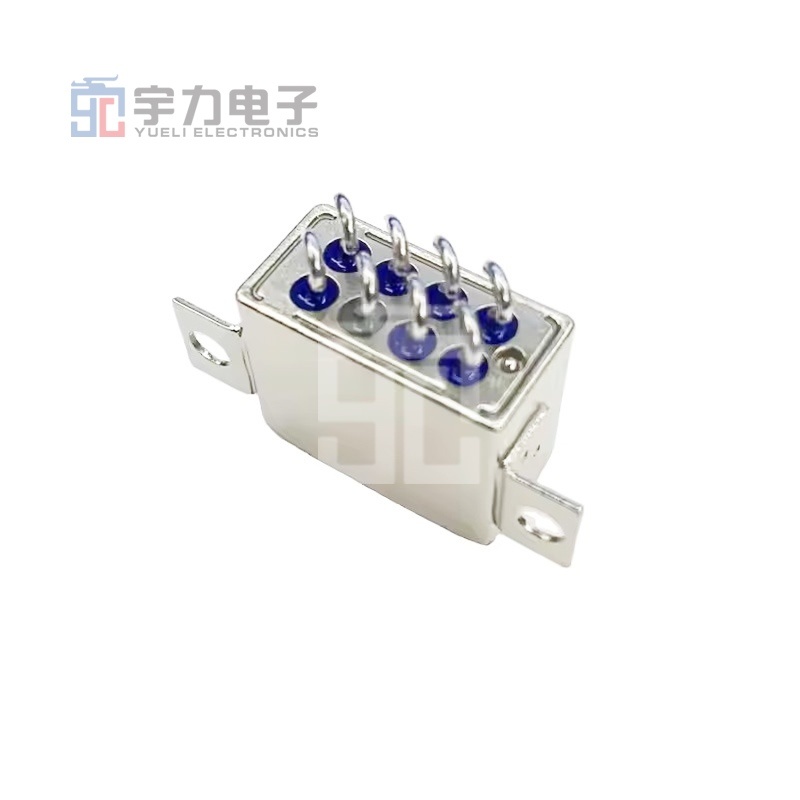
High power relays are a vital component in the field of electronic devices, specifically in the realm of power control and automation systems. Designed to switch high voltage and high current loads, these relays serve as crucial interfaces for controlling electrical circuits. Their primary function is to open or close circuits in response to an input signal, making them indispensable in numerous applications.
One of the key features of high power relays is their ability to manage substantial electrical loads, typically exceeding 10 Amperes, and often making them suitable for industrial applications where reliability and performance are paramount. They are commonly used in power distribution networks, motor control systems, and automation processes, playing an essential role in enhancing the efficiency and safety of these operations.
High power relays operate through electromagnetic principles. When an input control signal energizes the coil of the relay, it generates a magnetic field that moves a movable armature, either closing or opening the circuit contacts. This mechanism allows for the safe switching of high currents, isolating the control signal from the high power circuit and protecting sensitive components from potential damage.
In addition to their primary switching functions, high power relays are often designed with various features to enhance their reliability and lifespan. For instance, many models incorporate built-in arc suppressors to minimize contact wear during switching, which is critical in high load applications. Furthermore, the materials used in the construction of these relays are selected for their ability to withstand high temperatures and electrical stress, ensuring optimal performance even in challenging environments.
The applications of high power relays are vast and varied. They can be found in automotive systems where they control headlights, motors, and battery management systems. In industrial settings, they are integral to machinery control, HVAC systems, and power factor correction equipment. Additionally, in renewable energy systems, such as solar inverters and wind turbine controllers, high power relays play a crucial role in managing energy flow and ensuring operational efficiency.
Overall, understanding the functionality and significance of high power relays is essential for professionals in the electronics and automation industries. By leveraging the capabilities of these devices, engineers and technicians can design more efficient, reliable, and safe systems that meet the demands of modern technology. Whether in industrial applications or consumer electronics, high power relays are pivotal in driving innovation and improving energy management solutions.
One of the key features of high power relays is their ability to manage substantial electrical loads, typically exceeding 10 Amperes, and often making them suitable for industrial applications where reliability and performance are paramount. They are commonly used in power distribution networks, motor control systems, and automation processes, playing an essential role in enhancing the efficiency and safety of these operations.
High power relays operate through electromagnetic principles. When an input control signal energizes the coil of the relay, it generates a magnetic field that moves a movable armature, either closing or opening the circuit contacts. This mechanism allows for the safe switching of high currents, isolating the control signal from the high power circuit and protecting sensitive components from potential damage.
In addition to their primary switching functions, high power relays are often designed with various features to enhance their reliability and lifespan. For instance, many models incorporate built-in arc suppressors to minimize contact wear during switching, which is critical in high load applications. Furthermore, the materials used in the construction of these relays are selected for their ability to withstand high temperatures and electrical stress, ensuring optimal performance even in challenging environments.
The applications of high power relays are vast and varied. They can be found in automotive systems where they control headlights, motors, and battery management systems. In industrial settings, they are integral to machinery control, HVAC systems, and power factor correction equipment. Additionally, in renewable energy systems, such as solar inverters and wind turbine controllers, high power relays play a crucial role in managing energy flow and ensuring operational efficiency.
Overall, understanding the functionality and significance of high power relays is essential for professionals in the electronics and automation industries. By leveraging the capabilities of these devices, engineers and technicians can design more efficient, reliable, and safe systems that meet the demands of modern technology. Whether in industrial applications or consumer electronics, high power relays are pivotal in driving innovation and improving energy management solutions.
Xi'an Yuli Electronic Technology Co., Ltd.
Whats App:+8618122061211

Message consultation
Note: Please leave your contact information and our professionals will contact you as soon as possible!