Welcome to the official website of Xi'an Yuli Electronic Technology Co., Ltd.


Understanding Signal Relays: Key Components in Electronic Applications
2026-02-14
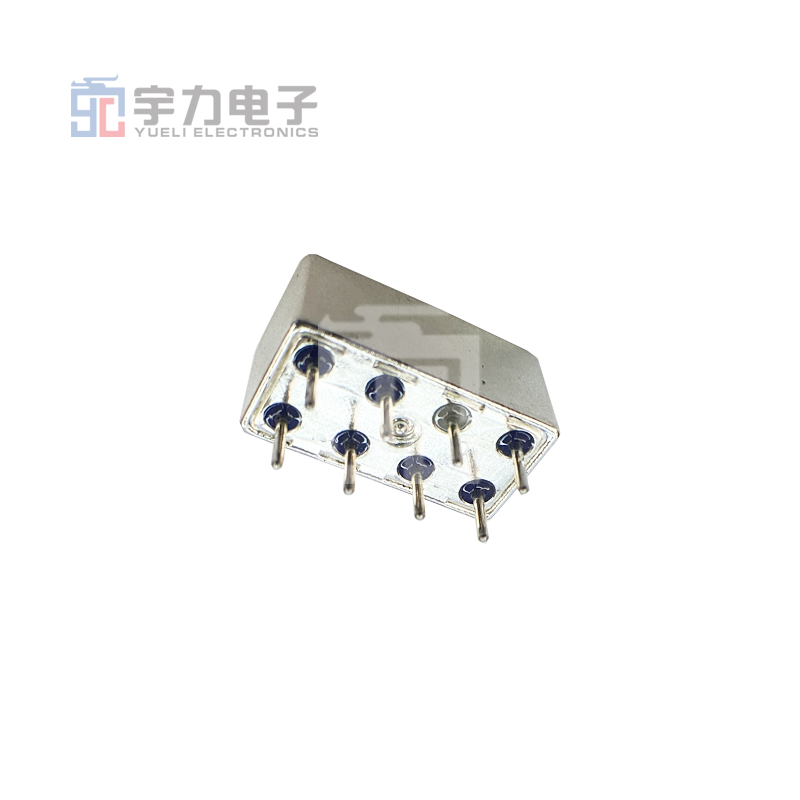
Signal relays serve as essential components in various electronic systems, functioning as switches that control the flow of electrical signals. These devices are designed to manage low-power signals while providing isolation between different circuits, thereby ensuring that signal integrity is maintained. The primary function of a signal relay is to enable a low-power input signal to control a higher-power circuit without direct electrical connection, making them crucial in applications where safety and reliability are paramount.
One of the core advantages of using signal relays is their ability to manage multiple channels within a single device. This can lead to reduced space requirements on a circuit board, as several relays can be integrated into a single module. Furthermore, signal relays can handle multiple input and output configurations, allowing for greater flexibility in circuit design. This versatility makes them ideal for use in various applications, including telecommunications, automotive systems, and industrial automation.
Signal relays can be categorized into electromagnetic and solid-state types. Electromagnetic relays use an electromagnet to mechanically operate a switch, providing a clear advantage in terms of robustness and load handling capabilities. However, they may be slower in response time compared to solid-state relays, which utilize semiconductor components for switching. The latter type offers faster operation and longer lifespans, making them suitable for high-speed applications.
When selecting signal relays for a specific application, several factors should be taken into consideration. These include the voltage and current ratings, switching speed, form factor, and the type of load being controlled. For instance, some applications may require relays with higher switching capacities to manage inductive loads, while others may prioritize low power consumption.
Moreover, signal relays are often used in conjunction with other components, such as microcontrollers, to create automated systems. This integration enhances the functionality of electronic devices by allowing for remote control and monitoring capabilities. For example, in building automation systems, signal relays can be used to control lighting or HVAC systems based on sensor inputs, thus improving energy efficiency.
In conclusion, signal relays are pivotal in ensuring efficient and reliable operation in various electronic applications. Their ability to manage multiple channels, combined with flexibility in design and integration capabilities, makes them indispensable in modern electronic systems. Understanding the characteristics and applications of signal relays will empower engineers and designers to make informed decisions in their projects, ultimately leading to improved performance and reliability in electronic devices.
One of the core advantages of using signal relays is their ability to manage multiple channels within a single device. This can lead to reduced space requirements on a circuit board, as several relays can be integrated into a single module. Furthermore, signal relays can handle multiple input and output configurations, allowing for greater flexibility in circuit design. This versatility makes them ideal for use in various applications, including telecommunications, automotive systems, and industrial automation.
Signal relays can be categorized into electromagnetic and solid-state types. Electromagnetic relays use an electromagnet to mechanically operate a switch, providing a clear advantage in terms of robustness and load handling capabilities. However, they may be slower in response time compared to solid-state relays, which utilize semiconductor components for switching. The latter type offers faster operation and longer lifespans, making them suitable for high-speed applications.
When selecting signal relays for a specific application, several factors should be taken into consideration. These include the voltage and current ratings, switching speed, form factor, and the type of load being controlled. For instance, some applications may require relays with higher switching capacities to manage inductive loads, while others may prioritize low power consumption.
Moreover, signal relays are often used in conjunction with other components, such as microcontrollers, to create automated systems. This integration enhances the functionality of electronic devices by allowing for remote control and monitoring capabilities. For example, in building automation systems, signal relays can be used to control lighting or HVAC systems based on sensor inputs, thus improving energy efficiency.
In conclusion, signal relays are pivotal in ensuring efficient and reliable operation in various electronic applications. Their ability to manage multiple channels, combined with flexibility in design and integration capabilities, makes them indispensable in modern electronic systems. Understanding the characteristics and applications of signal relays will empower engineers and designers to make informed decisions in their projects, ultimately leading to improved performance and reliability in electronic devices.
Xi'an Yuli Electronic Technology Co., Ltd.
Whats App:+8618122061211

Message consultation
Note: Please leave your contact information and our professionals will contact you as soon as possible!