Welcome to the official website of Xi'an Yuli Electronic Technology Co., Ltd.


Understanding High Power Relays: Key Insights and Applications
2025-10-03
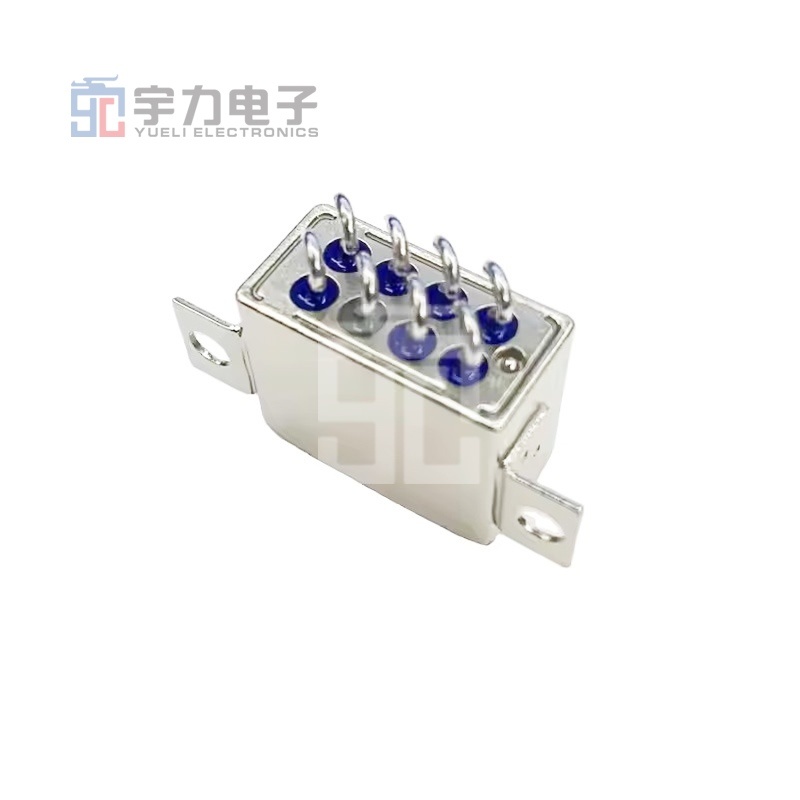
High power relays are essential components in electronic and electrical systems, serving as switches that manage significant power loads. They act as the backbone of many applications, from industrial machinery to household appliances, ensuring safe and efficient operation. Understanding the intricacies of high power relays can help you make informed decisions when integrating these devices into your projects.
One of the primary functions of a high power relay is to control high voltage or high current circuits. By using a relatively small control signal, a high power relay can switch larger loads, providing isolation between the control circuit and the load. This makes them indispensable in applications where safety and reliability are paramount. High power relays often contain contacts rated for thousands of volts and amps, enabling them to handle extensive electrical demands.
The construction of high power relays typically involves materials capable of withstanding high temperatures and electrical stresses. Commonly used materials include silver alloys for contact points and durable plastics for the housing. This robust construction allows high power relays to operate efficiently even in harsh environments, making them suitable for use in industrial settings, automotive applications, and renewable energy systems.
High power relays come in various types, including electromagnetic, solid-state, and hybrid models. Electromagnetic relays utilize an electromagnet to operate mechanical contacts, while solid-state relays use semiconductor devices to switch loads without moving parts. Hybrid relays combine the benefits of both technologies, providing durability and fast switching capabilities.
In terms of applications, high power relays play a crucial role in many sectors. In industrial automation, they control heavy machinery and equipment, ensuring that operations run smoothly and safely. In the automotive industry, they manage power distribution for various components, from lighting systems to electric motors. Additionally, in renewable energy applications, such as solar inverters and wind turbines, high power relays are vital for managing energy flow and ensuring system integrity.
Moreover, the rise of smart technologies has led to the development of advanced high power relays equipped with features such as remote monitoring and automated control. These innovations allow for more efficient energy management and enhance the overall reliability of systems.
In conclusion, understanding high power relays is critical for anyone involved in electronics and electrical engineering. Their capability to control high power loads safely and efficiently makes them invaluable across various applications. By leveraging these components effectively, you can enhance the performance and safety of your electronic systems, ultimately leading to more innovative and reliable solutions.
One of the primary functions of a high power relay is to control high voltage or high current circuits. By using a relatively small control signal, a high power relay can switch larger loads, providing isolation between the control circuit and the load. This makes them indispensable in applications where safety and reliability are paramount. High power relays often contain contacts rated for thousands of volts and amps, enabling them to handle extensive electrical demands.
The construction of high power relays typically involves materials capable of withstanding high temperatures and electrical stresses. Commonly used materials include silver alloys for contact points and durable plastics for the housing. This robust construction allows high power relays to operate efficiently even in harsh environments, making them suitable for use in industrial settings, automotive applications, and renewable energy systems.
High power relays come in various types, including electromagnetic, solid-state, and hybrid models. Electromagnetic relays utilize an electromagnet to operate mechanical contacts, while solid-state relays use semiconductor devices to switch loads without moving parts. Hybrid relays combine the benefits of both technologies, providing durability and fast switching capabilities.
In terms of applications, high power relays play a crucial role in many sectors. In industrial automation, they control heavy machinery and equipment, ensuring that operations run smoothly and safely. In the automotive industry, they manage power distribution for various components, from lighting systems to electric motors. Additionally, in renewable energy applications, such as solar inverters and wind turbines, high power relays are vital for managing energy flow and ensuring system integrity.
Moreover, the rise of smart technologies has led to the development of advanced high power relays equipped with features such as remote monitoring and automated control. These innovations allow for more efficient energy management and enhance the overall reliability of systems.
In conclusion, understanding high power relays is critical for anyone involved in electronics and electrical engineering. Their capability to control high power loads safely and efficiently makes them invaluable across various applications. By leveraging these components effectively, you can enhance the performance and safety of your electronic systems, ultimately leading to more innovative and reliable solutions.
Xi'an Yuli Electronic Technology Co., Ltd.
Whats App:+8618122061211

Message consultation
Note: Please leave your contact information and our professionals will contact you as soon as possible!