Welcome to the official website of Xi'an Yuli Electronic Technology Co., Ltd.


Comparing Miniature Relays: Essential Insights for Optimal Selection
2025-10-04
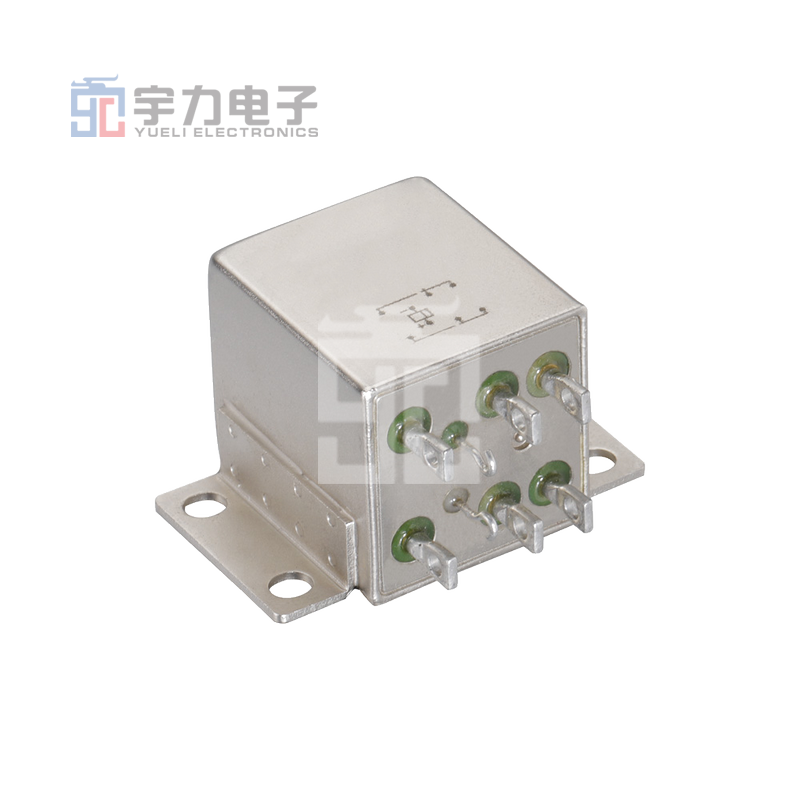
Comparing Miniature Relays: Essential Insights for Optimal Selection
Table of Contents
- 1. Introduction to Miniature Relays
- 2. What Are Miniature Relays?
- 3. How Miniature Relays Work
- 4. Key Specifications to Consider When Choosing Miniature Relays
- 5. Types of Miniature Relays
- 6. Applications of Miniature Relays
- 7. Comparison Between Different Types of Miniature Relays
- 8. Common Issues with Miniature Relays
- 9. Frequently Asked Questions
- 10. Conclusion
1. Introduction to Miniature Relays
Miniature relays are compact electromagnetic switches that play a critical role in various electronic circuits. Their small size allows them to be used in applications where space is at a premium, making them ideal for everything from consumer electronics to industrial automation. Understanding what miniature relays are and how they function is essential for making informed decisions concerning electronic design and application.
2. What Are Miniature Relays?
Miniature relays are electromechanical devices that use an electromagnetic coil to control a switch that can open or close a circuit. They are characterized by their small footprint and low power consumption, making them an integral component in various electronic systems. The primary purpose of a miniature relay is to enable a low-power control circuit to control a higher-power circuit without a direct electrical connection.
Key Features of Miniature Relays
- Compact Size: Miniature relays are designed to occupy minimal space, allowing for efficient circuit design.
- Low Power Consumption: These relays consume less power compared to their larger counterparts, making them suitable for battery-operated devices.
- Variety of Configurations: Available in various configurations, miniature relays can be designed for specific applications, which enhances their versatility.
3. How Miniature Relays Work
To understand how miniature relays work, we need to look at their fundamental components. A typical miniature relay consists of a coil, an armature, a spring, and contacts.
The Working Mechanism
1. **Electromagnetic Activation**: When current flows through the coil, it creates a magnetic field.
2. **Movement of the Armature**: The magnetic field attracts the armature, causing it to move.
3. **Switching Action**: As the armature moves, it either opens or closes the contacts, thereby switching the circuit on or off.
4. **Deactivation**: When the current stops, the armature returns to its original position, disengaging the contacts.
This simple yet effective mechanism allows miniature relays to control larger loads with ease and precision.
4. Key Specifications to Consider When Choosing Miniature Relays
When selecting a miniature relay for your project, it’s essential to consider several specifications that impact performance and compatibility:
Coil Voltage
The coil voltage indicates the voltage required to energize the relay. Common options include 5V, 12V, and 24V. Ensuring that the coil voltage aligns with your control circuit is crucial for optimal operation.
Contact Rating
Contact rating refers to the maximum current and voltage that the contacts can handle. It's important to choose a relay whose contact rating meets or exceeds the requirements of the load you are controlling.
Switching Speed
Switching speed is the time it takes for the relay to operate once energized. For applications requiring rapid cycling, selecting a relay with a suitable switching speed is vital.
Isolation Voltage
Isolation voltage defines the maximum voltage that can be applied between the coil and the contacts without arcing. This specification is critical for ensuring the safety and reliability of your circuit.
5. Types of Miniature Relays
There are several types of miniature relays, each designed for specific applications and requirements.
Standard Miniature Relays
These relays are the most common and are used in a wide range of applications. They typically feature a single or double pole configuration.
Solid State Relays (SSRs)
Unlike electromagnetic relays, SSRs use semiconductor components to switch circuits. They are favored for their faster switching speeds and longer lifespans.
Time Delay Relays
These relays incorporate a timing mechanism, allowing them to delay the switching operation for a preset amount of time. They are often used in applications where timing is critical.
Miniature Power Relays
Designed for higher-load applications, miniature power relays can handle larger currents while maintaining a compact size.
6. Applications of Miniature Relays
Miniature relays find extensive applications across various sectors, including:
Home Appliances
From refrigerators to washing machines, miniature relays control various functions, enhancing overall efficiency.
Industrial Automation
In manufacturing setups, miniature relays manage machinery, conveyor belts, and other critical components, ensuring smooth operations.
Telecommunications
Miniature relays are instrumental in switching circuits and signal routing, enabling reliable communications.
Automotive Systems
In vehicles, these relays control lighting, power windows, and other electrical systems, contributing to user convenience and safety.
7. Comparison Between Different Types of Miniature Relays
When comparing miniature relays, consider essential factors such as **cost**, **performance**, and **application suitability**.
Electromechanical Versus Solid State
Electromechanical relays are generally more affordable and can handle higher loads, while solid-state relays offer faster switching and longer lifespans but at a higher cost.
Standard Versus Time Delay Relays
Standard relays provide immediate switching, whereas time delay relays introduce a delay, making them suitable for applications requiring sequential operations.
By analyzing these differences, you can choose the most suitable relay for your specific needs.
8. Common Issues with Miniature Relays
While miniature relays are reliable components, they are not without challenges. Common issues include:
Contact Welding
When contacts remain closed due to excessive current, this can lead to failure. It's essential to adhere to the specified contact ratings to avoid this issue.
Short Circuiting
Improper installation or use beyond the ratings can lead to short-circuiting. Ensure proper connections and safeguard against overloads.
Coil Burnout
Exceeding coil voltage ratings can result in coil burnout. Always verify voltage requirements before connecting to a power source.
9. Frequently Asked Questions
What is the lifespan of a miniature relay?
The lifespan can vary based on the type and application but typically ranges from 1 million to 10 million operations.
Can miniature relays be used in high-frequency applications?
While they can be used, it's recommended to choose solid-state relays for high-frequency applications due to their faster switching capabilities.
How do I choose the right miniature relay for my application?
Consider key specifications such as coil voltage, contact rating, switching speed, and isolation voltage based on your specific needs.
Are miniature relays waterproof?
Many miniature relays have specific enclosures that provide waterproofing; however, always check the specifications before use in moisture-prone environments.
What is the difference between a relay and a contactor?
Contactors are designed for higher voltage and current applications, while relays are more suitable for lower power circuits.
10. Conclusion
Understanding miniature relays is crucial for making informed decisions in electronic design and application. By considering factors such as specifications, types, applications, and potential issues, we can select the right miniature relay that best meets our needs. Whether you are developing consumer electronics or industrial systems, the insights provided in this article will help you navigate through the complexities of miniature relays, ensuring reliability and efficiency in your projects.
Xi'an Yuli Electronic Technology Co., Ltd.
Whats App:+8618122061211

Message consultation
Note: Please leave your contact information and our professionals will contact you as soon as possible!