Welcome to the official website of Xi'an Yuli Electronic Technology Co., Ltd.


Understanding High Power Relays: Key Components and Their Applications
2025-10-17
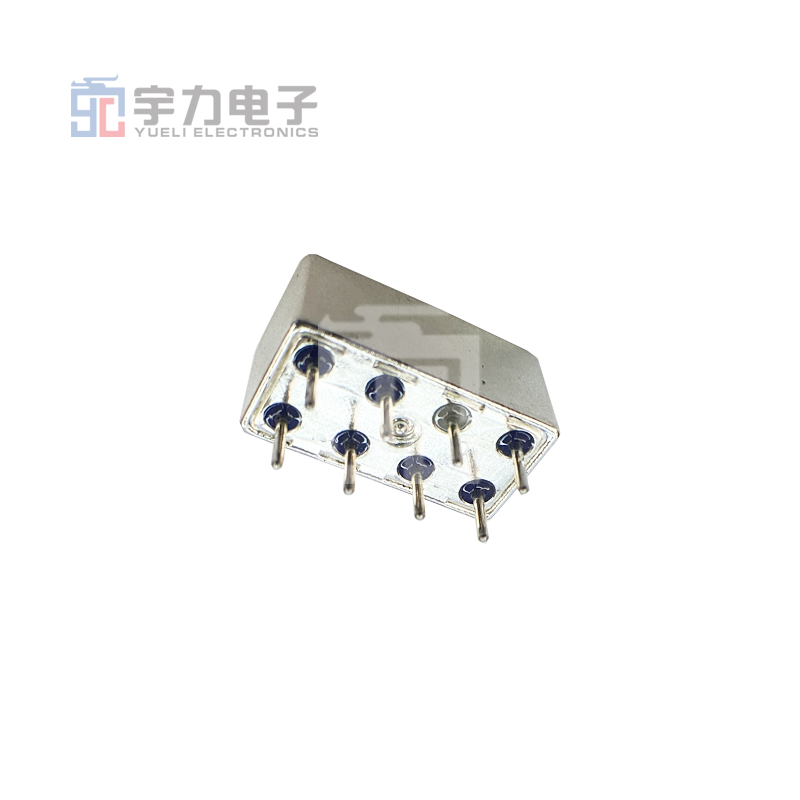
High power relays are crucial components in many electronic systems, providing the ability to control high voltage and high current applications. These relays are designed to handle significant power loads, making them essential in industries such as automotive, industrial automation, and renewable energy. Understanding how high power relays work and their applications can enhance your effectiveness in designing and implementing electronic systems.
At their core, high power relays function as electrically operated switches. They rely on an electromagnetic coil that, when energized, creates a magnetic field to move a contact armature, thus closing or opening an electrical circuit. This mechanism allows low-power control signals to manage higher power loads, ensuring safety and efficiency. The design typically includes robust contacts made from materials that can withstand the high temperatures and electrical stresses associated with heavy-duty applications.
One of the significant advantages of high power relays is their ability to isolate control circuits from high power loads. This characteristic is vital for protecting sensitive electronic components and ensuring the safe operation of equipment. Furthermore, high power relays offer various configurations, including normally open (NO) and normally closed (NC) contacts, allowing flexibility in circuit design.
When selecting a high power relay, several key specifications should be considered. The rated voltage and current are fundamental, as they must match or exceed the requirements of the application to prevent failure. Additionally, factors such as switching speed, contact resistance, and thermal performance can significantly impact the relay's efficiency and lifespan. For instance, relays with lower contact resistance can minimize energy losses during operation.
Applications for high power relays are vast. They are widely used in power distribution systems to control motors, heaters, and transformers. In the automotive industry, they play a crucial role in controlling lighting, heating systems, and other electrical components. Moreover, in renewable energy systems, such as solar and wind energy installations, high power relays are essential for managing the connection between energy sources and grid systems.
In conclusion, high power relays are integral to modern electronic applications, offering a reliable solution for controlling high loads while protecting sensitive components. By understanding their operation, advantages, and critical selection criteria, professionals can ensure the optimal performance of their electronic systems. Whether in industrial automation, automotive applications, or energy management, high power relays are indispensable tools in the world of electronics.
At their core, high power relays function as electrically operated switches. They rely on an electromagnetic coil that, when energized, creates a magnetic field to move a contact armature, thus closing or opening an electrical circuit. This mechanism allows low-power control signals to manage higher power loads, ensuring safety and efficiency. The design typically includes robust contacts made from materials that can withstand the high temperatures and electrical stresses associated with heavy-duty applications.
One of the significant advantages of high power relays is their ability to isolate control circuits from high power loads. This characteristic is vital for protecting sensitive electronic components and ensuring the safe operation of equipment. Furthermore, high power relays offer various configurations, including normally open (NO) and normally closed (NC) contacts, allowing flexibility in circuit design.
When selecting a high power relay, several key specifications should be considered. The rated voltage and current are fundamental, as they must match or exceed the requirements of the application to prevent failure. Additionally, factors such as switching speed, contact resistance, and thermal performance can significantly impact the relay's efficiency and lifespan. For instance, relays with lower contact resistance can minimize energy losses during operation.
Applications for high power relays are vast. They are widely used in power distribution systems to control motors, heaters, and transformers. In the automotive industry, they play a crucial role in controlling lighting, heating systems, and other electrical components. Moreover, in renewable energy systems, such as solar and wind energy installations, high power relays are essential for managing the connection between energy sources and grid systems.
In conclusion, high power relays are integral to modern electronic applications, offering a reliable solution for controlling high loads while protecting sensitive components. By understanding their operation, advantages, and critical selection criteria, professionals can ensure the optimal performance of their electronic systems. Whether in industrial automation, automotive applications, or energy management, high power relays are indispensable tools in the world of electronics.
Xi'an Yuli Electronic Technology Co., Ltd.
Whats App:+8618122061211

Message consultation
Note: Please leave your contact information and our professionals will contact you as soon as possible!